

Adventure Ropes
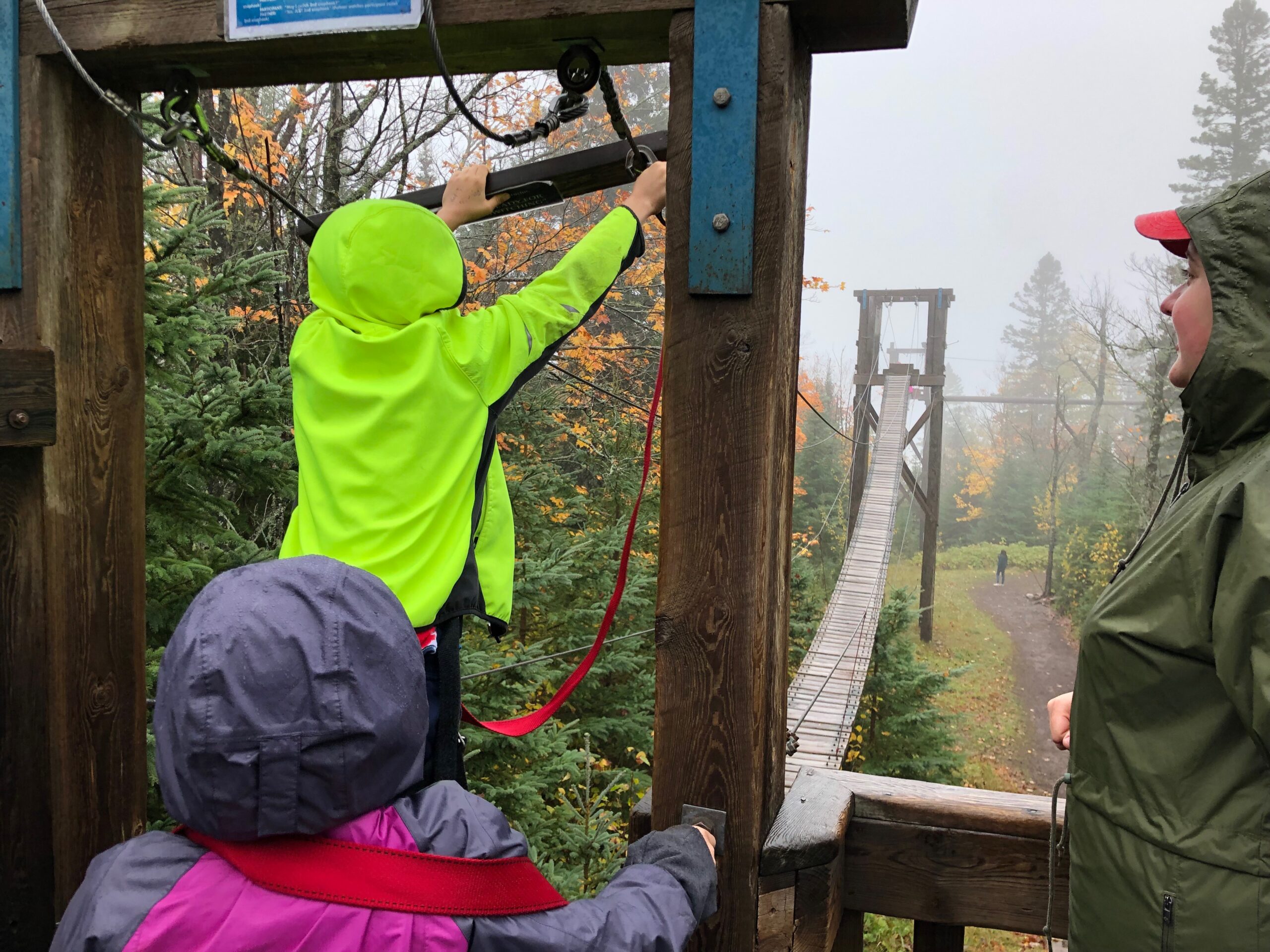
Find your strengths and abilities 30 feet off the ground.
Adventure for Every Age – Summer Camp Registration Open!
REGISTER NOW
Our nationally recognized curriculum brings learning to life, connecting students with the wonder of the natural world while meeting state standards, Common Core, and Next Generation Science Standards.
Students immerse themselves in forests, wetlands, lakes, and streams through hands-on observation, inquiry, and exploration. Lessons are designed to spark curiosity, build critical thinking skills, and create lasting memories.
Groups can choose a well-rounded mix of classes or focus on specific goals such as team building, sustainability, or immersive nature experiences. Every experience is personalized to inspire discovery, adventure, and meaningful learning.
Daytime classes are typically 3 hours long. The morning class goes from 8:30-11:30 am, and the afternoon class goes from 1:30-4:30 pm. Classes focus on science, personal growth, cultural history, team building, and outdoor skills, and align with Minnesota academic standards.
Evening classes go from 6:30-9:15 pm, and are taught by a Wolf Ridge Naturalist or adults from your group. Additional activities can be led by adults from your group from 6:30-8:00 pm. After the sun goes down, choose to have a campfire or go to an astronomy program led by a naturalist.
Classes are subject to seasonality and scheduling. Contact scheduling@wolf-ridge.org to learn about availability for your group.
Find your strengths and abilities 30 feet off the ground.
Learn about animals from the evidence they leave behind.
Observe & study the effects and influence of beaver activity.

Find hidden markers in the woods using a compass.
What tools and techniques help us discover the story of birds here and now?

Learn the ancient technique of block printing to express a natural experience.
Decode puzzles based on geology knowledge.
Paddle a canoe, explore a northern lake, learn canoeing skills, and gather scientific data.

Find hidden markers in the woods with a map and compass.
Learn the history of cross country skiing and experience the lifelong skill in our winter classroom.
Explore the relationship of art & the environment. What art will you create from items found in nature?
Explore farming from harvest to food preparation.

Learn about the complexity in a forest ecosystem and how humans interact with it.
What are frog and toad adaptations and how can we use these to identify species?

Learn about the ecosystem alive under the snow and ice of Wolf Lake.

Geological history of Minnsota - How do rocks influence our local and regional landscapes?
Combine navigational technology with exploring in nature to discover hidden clues.
A challenge & growth experience to apply in everyday life.
Investigate & observe the diversity of organisms & why they are important.
Examine aquatic animal life and learn to evaluate the health of Wolf Lake.
A program blending hiking, team-building, mindfulness, and solo time.

Learn about the Wolf Ridge maple syruping tradition & connection with Ojibwe people.
Understand and explore how darkness communications and senses differ from light.
Explore Wolf Ridge’s night sky via science and stories—connect with nature.
Use tools of science to learn about mammals in the northwoods.
Learn the lifestyle & skills of the North Shore Ojibwe people, 270 years ago.
How did Ojibwe people in Minnesota 270 years ago live and travel in the winter?
Students will learn about the adaptations of barn owls and their role in the food web.
Examine human resource use and impact through the art of papermaking.

Learn the value of renewable energy and how can we incorporate it into our lives.
Learn the history of rope making & experience how to tie useful knots for outdoor pursuits.
Students study mammal skulls to infer behaviors and adaptations.
Learn the characteristics of small mammals in northern Minnesota, & their role in the ecosystem.
Story Cubes Ridge Notes
Is Sawmill Creek healthy? Learn the biological properties of a healthy stream.
Explore the Lake Superior winter ecosystem and landscape on snowshoes.
Explore & examine the geology, history, & meteorology of this important fresh water lake.
Learn how to practice and apply being an effective team working through challenges.
Learn what tools and techniques help us discover and identify tree species.
Through the game of volleyball, students will practice cooperation and communication skills.
What would it be like as a voyageur, and what was their role in the local fur trade?
Learn how human actions impact watersheds, water quality & community.
How can making weather observations now help forecast what’s changing?
Learn what is unique about wetlands by collecting & analyzing data.
What values do plants hold, and how to identify and harvest edible species?
Learn outdoor survival skills and teamwork in our winter woods classroom.