

Trails, Lakes, & Streams
Discover Learning Beyond the Classroom Walls
Wolf Ridge’s 2,000-acre campus is an interconnected living landscape where learning happens across forests, streams, wetlands, lakes, and ridgelines. Trails, bridges, boardwalks, and overlooks provide access to outdoor learning spaces while remaining fully integrated into the educational experience, allowing students to engage with natural systems, collect observations, and make discoveries throughout their journey.
Explore all of our classrooms and learning spaces. Discover Classrooms

Hiking & Ski Trails
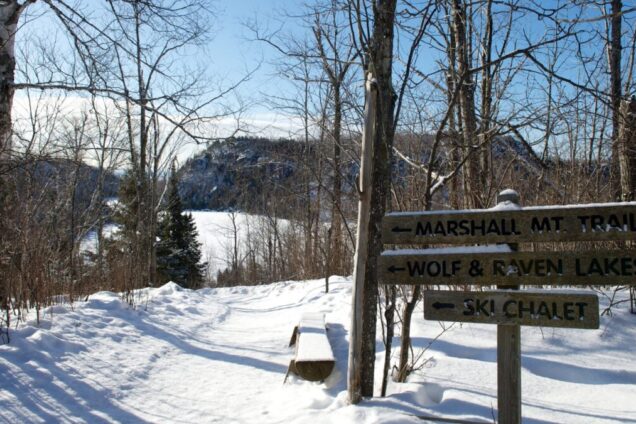
Wolf Ridge’s trail system offers year-round access to outdoor learning and exploration. Eighteen miles of well-marked trails weave through forests, wetlands, and open landscapes, connecting visitors and students to a variety of environmental education destinations and field study areas. In winter, two groomed cross-country ski trails are maintained by staff and used for both instruction and recreational learning, providing additional opportunities to engage with the landscape in seasonal conditions. All trails are open to drop-in visitors; please check in at the administration office upon arrival.

Sawmill Creek
Beginning just outside the Education Building, the Sawmill Trail descends nearly 300 feet from the ridge into the Sawmill Creek watershed, functioning as both access route and learning environment within Wolf Ridge’s outdoor education program. Along the trail, students move through changing forest communities, wildlife habitats, and watershed features before reaching Sawmill Creek, where they conduct hands-on field studies in stream ecology, fisheries, wildlife biology, and forest systems. The creek flows through more than two miles of alder and spruce wetlands that support brook trout, beaver, moose, otter, and a diverse range of aquatic and terrestrial species. Elevated boardwalks and the Sawmill Creek Bridge provide protected access across sensitive wetlands, allowing direct observation of ecological processes while ensuring habitat preservation and making movement through the landscape part of the instructional experience.
Sawmill Creek Vista
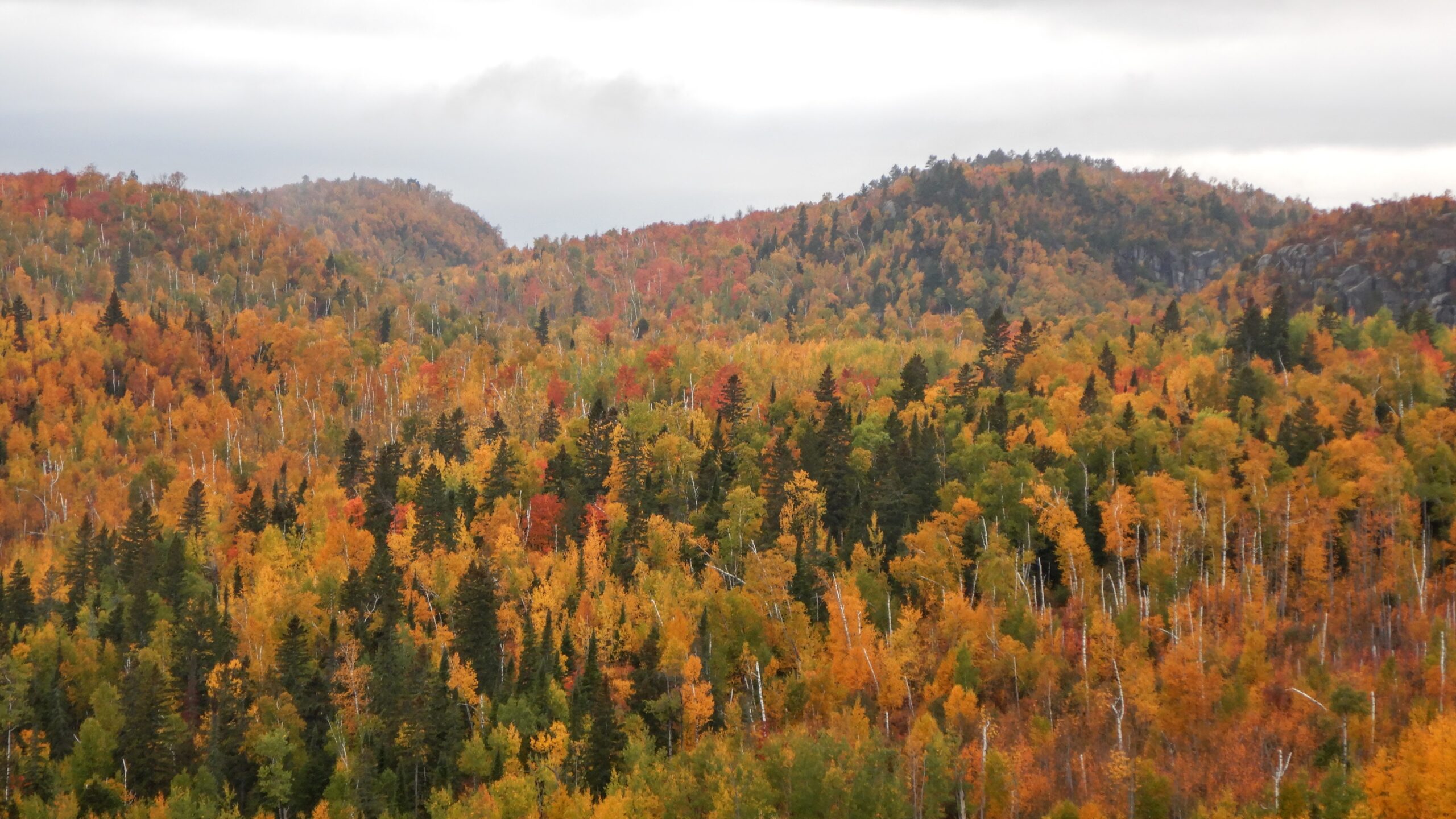
Sawmill Creek Vista extends the learning environment beyond the creek corridor, providing elevated viewpoints that support landscape-scale interpretation. From the north ridge, the vista overlooks more than 100 square miles of continuous forest and wetland ecosystems, giving students a broader perspective on watershed systems and regional landform relationships. On clear days, views from Marshall Mountain at 1,405 feet reveal Lake Superior stretching to the horizon, linking inland ecological systems to the largest freshwater body by surface area in the world. Together, these vantage points function as interpretive learning areas where students analyze ecological connections across multiple landscapes and scales.
Mystical Mountain
Mystical Mountain is part of Wolf Ridge’s 2,000-acre living classroom, where dramatic geologic features serve as outdoor learning environments. Located in the southern corner of campus, the 110-foot anorthosite cliffs are among the tallest in Minnesota and provide a striking example of the region’s ancient bedrock geology. These cliffs are used by Wolf Ridge students as part of experiential learning in earth science, risk awareness, and outdoor skills development, while also serving as a destination for regional climbers. In this setting, geology becomes tangible as students engage directly with the landscape, interpreting rock formations and understanding the forces that shaped them over time.
Wolf Lake
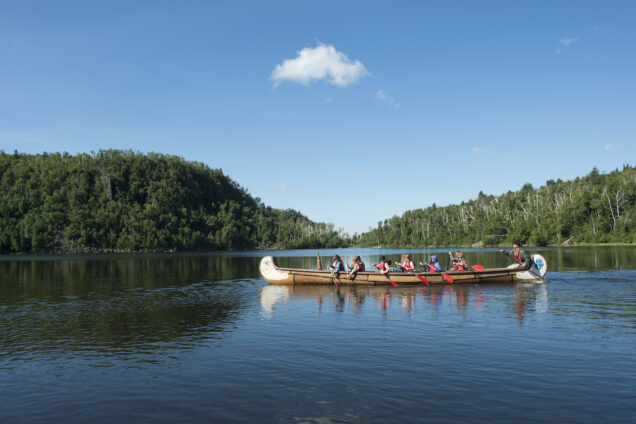
Wolf Lake is a central hub for outdoor learning and exploration at Wolf Ridge. The lake supports canoe-based field studies, lake ecology investigations, and seasonal ice research in winter, with two canoe launch sites and established study areas providing direct access to aquatic learning environments. During the open water season, students can often be seen paddling 36-foot birch bark canoes as part of experiential learning journeys that connect Wolf Lake to nearby waterways and portage routes, making the lake both a field site and a gateway for extended exploration.
Raven Lake
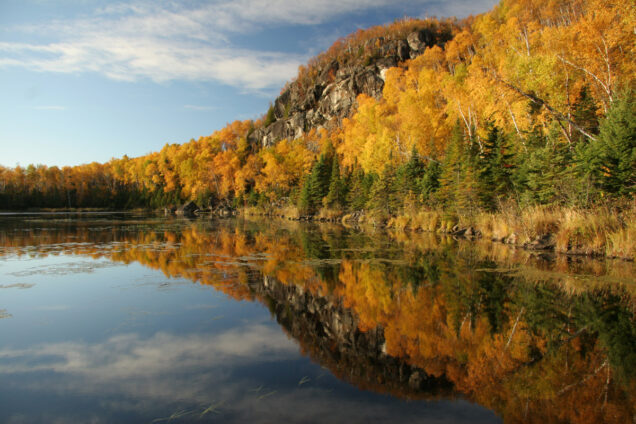
Raven Lake offers a dynamic setting for year-round field-based learning. Named for the ravens that nest along nearby cliff edges, the lake combines rocky shoreline with a large wetland complex on its northern edge, supporting a wide range of ecological study opportunities. In spring, summer, and fall, students conduct wetland investigations and practice canoeing skills in real-world conditions, while winter transforms the lake into a landscape for snowshoeing, skiing, and exploration of a naturally forming ice cave, allowing direct observation of seasonal ecological change.
Baptism River
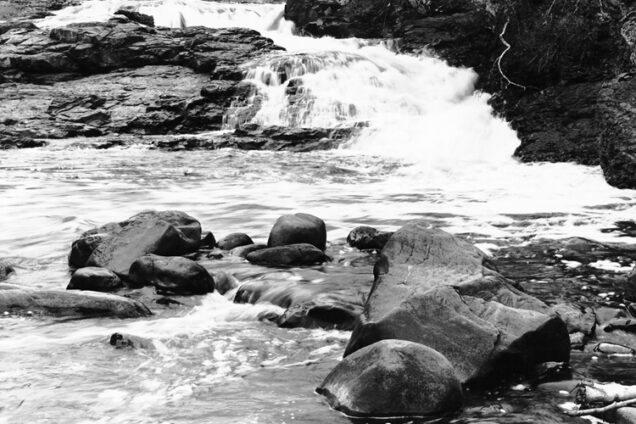
Baptism River forms part of the edge of Wolf Ridge’s landscape and offers a powerful example of an active, free-flowing North Shore watershed. Named by early French missionaries for its use at the river’s mouth near Lake Superior, the river is geologically young but dynamically active, carving through some of the region’s oldest bedrock as it descends toward the lake. Within the Wolf Ridge area, the river remains largely wild and undeveloped, with waterfalls, rapids, and abundant wildlife providing rich opportunities for observation and study of fluvial processes and ecosystem dynamics.