
Sawmill Creek Corridor
Discover Learning at Every Turn
Together, these landscapes form an integrated system for place-based environmental education at Wolf Ridge.
Sawmill Creek Corridor Learning System
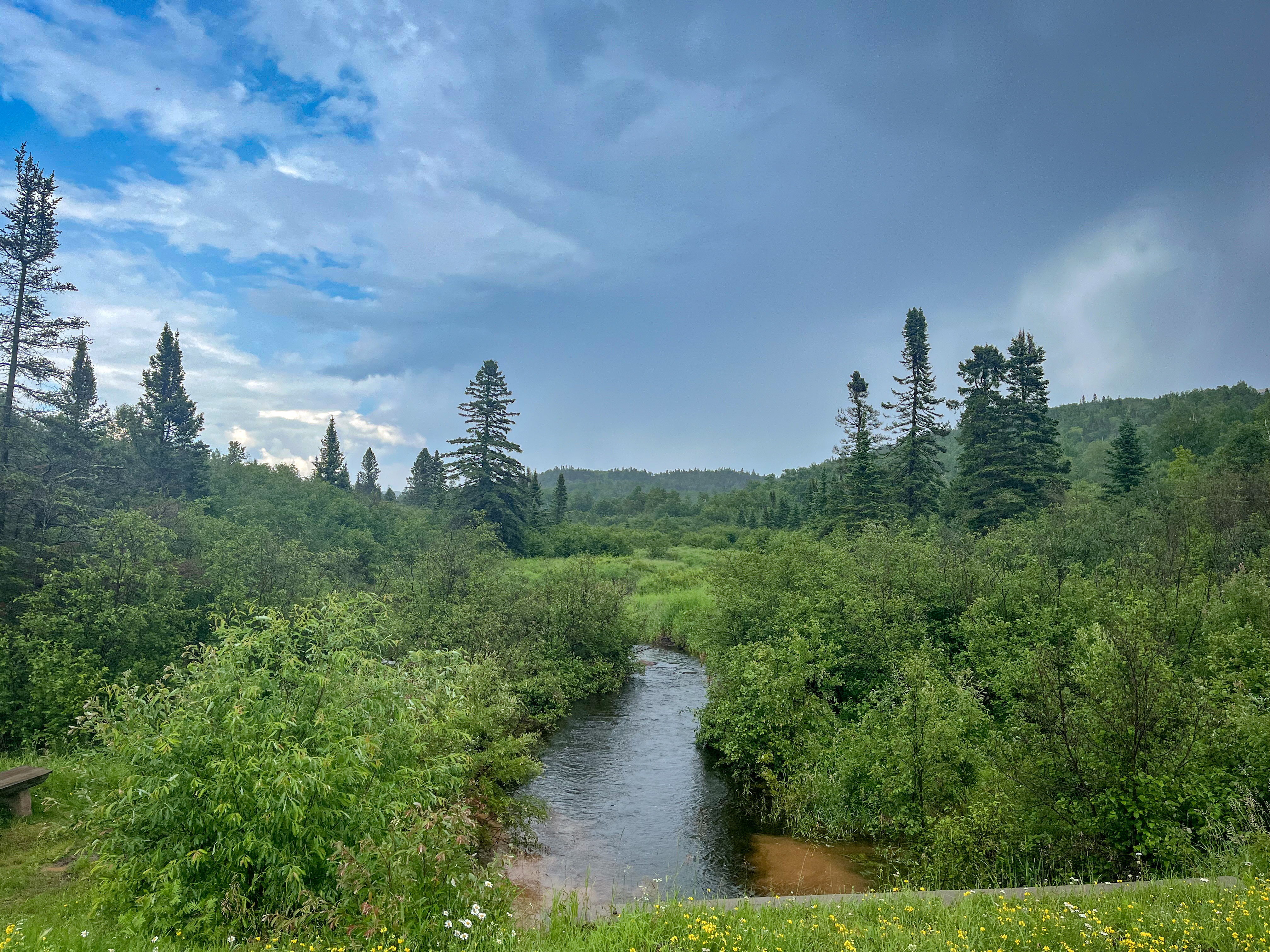
The Sawmill Creek Corridor Learning System is one of many interconnected learning environments embedded throughout Wolf Ridge’s 2,000-acre campus.
This system connects students with forests, wetlands, streams, and panoramic viewpoints that bring environmental concepts to life through direct experience.
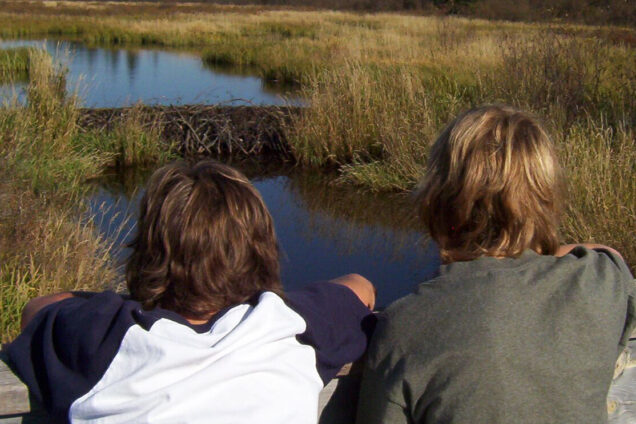
Beginning on the ridge above campus just outside the Education Building, the Sawmill Trail descends nearly 300 feet into the Sawmill Creek watershed, where students explore stream ecology, fisheries and wildlife biology, forest systems, and watershed dynamics. Sawmill Creek flows through more than two miles of alder and spruce wetlands and provides habitat for brook trout, beaver, moose, otter, and many other species.
Sawmill Creek Corridor Classroom
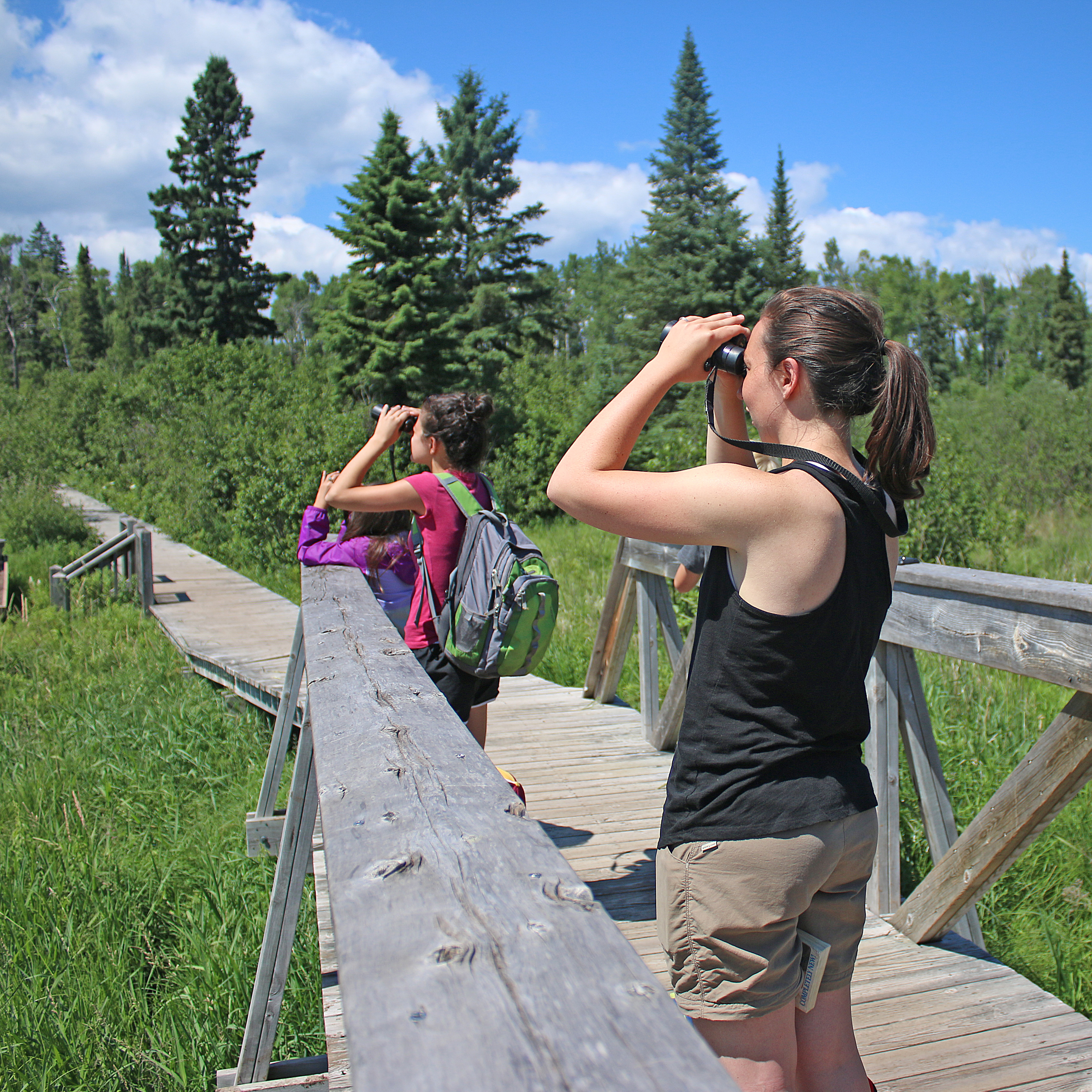
The Sawmill Creek Bridge and Boardwalk serve as the primary gateway into the Sawmill Creek Corridor Classroom while also functioning as learning spaces in their own right.
Since 1995, the 50-foot pedestrian bridge and elevated boardwalk have connected students to outdoor classrooms, field study sites, and ecological research areas, providing safe access while protecting sensitive wetland habitats. Along the way, students observe stream processes, wetland ecology, wildlife activity, and seasonal changes firsthand, transforming movement through the corridor into an educational experience. Approximately 4,500 students travel this route each year, making the bridge and boardwalk an essential part of the hands-on, place-based learning that defines Wolf Ridge.
The landscape extends to Sawmill Vista, where students overlook more than 100 square miles of forest and wetland ecosystems. From this vantage point, along with nearby views of Lake Superior from Marshall Mountain, students gain a broader understanding of the connections between landscapes, watersheds, and the natural systems of northeastern Minnesota.


