
By Joe Walewski
Dragonfly Migration on Minnesota’s North Shore
There’s a point every late summer when I start paying a little more attention to the sky.
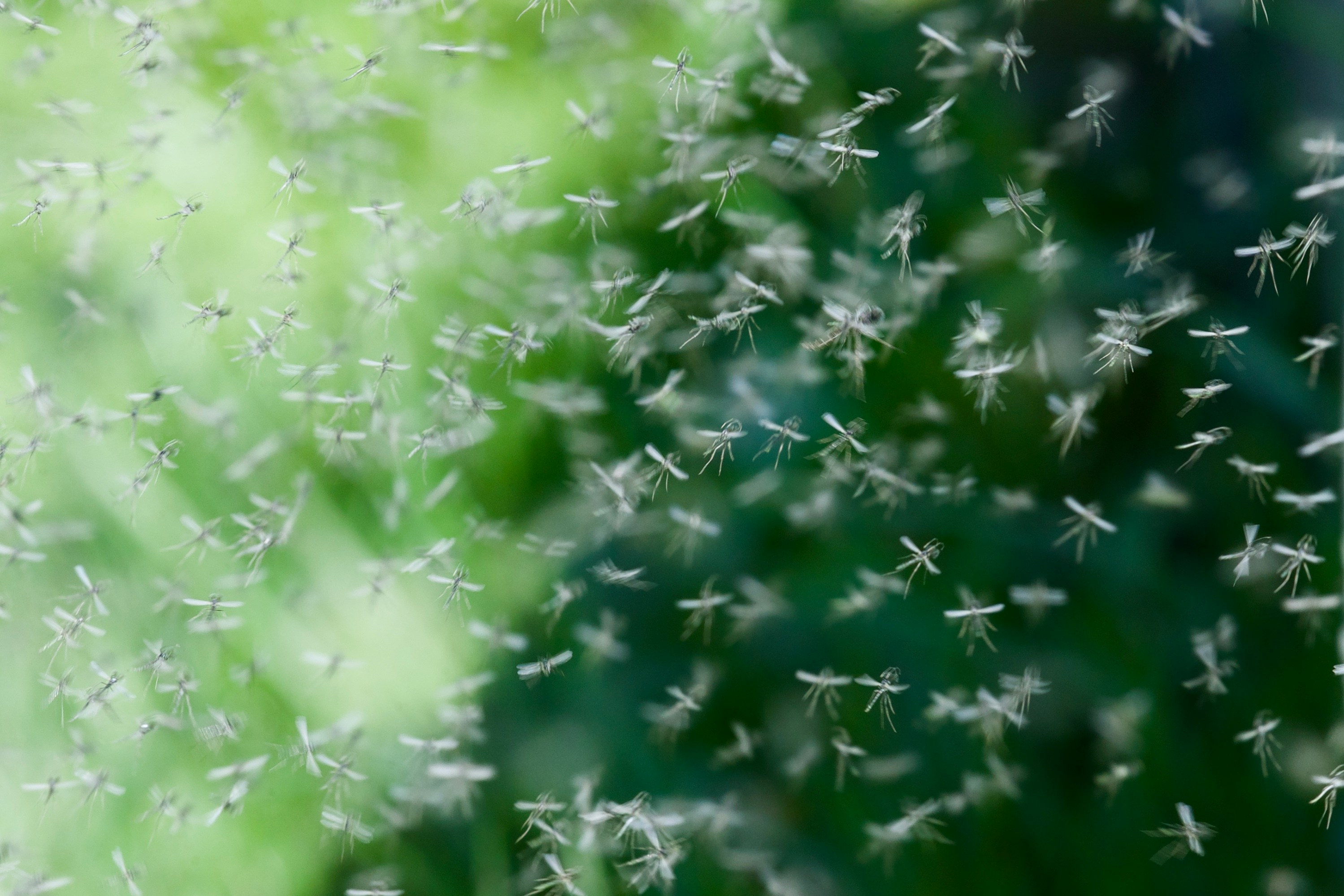
Back-to-school season has arrived, light is softening, and right as we welcome our new graduate naturalists to Wolf Ridge for their year-long program – a late-summer arrival I’ve watched play out for almost four decades – Common Green Darners and other dragonflies are quietly taking to the air. When a big push comes through, the sky becomes alive with motion. It is striking, sudden, and easy to miss if you aren’t looking up.
We are accustomed to watching migrating birds along the North Shore. Lake Superior acts as a natural barrier, funneling warblers and raptors into a narrow shoreline corridor. But dragonflies make this journey, too – sometimes by the tens of thousands.
Tens of thousands on the move
If you visit Hawk Ridge in Duluth during late August or early September, sunny days with favorable winds reveal an astounding spectacle.
Counters here have estimated single-day flights of 35,000 to over 50,000 dragonflies streaming past. At peak density, the insects travel in numbers high enough to register on Doppler radar – appearing on screen like a sudden rain cloud passing over Duluth.
It is a silent, immense drift of life overhead, connecting the north woods to distant waters south.
.
Recognizinig the Green Darner
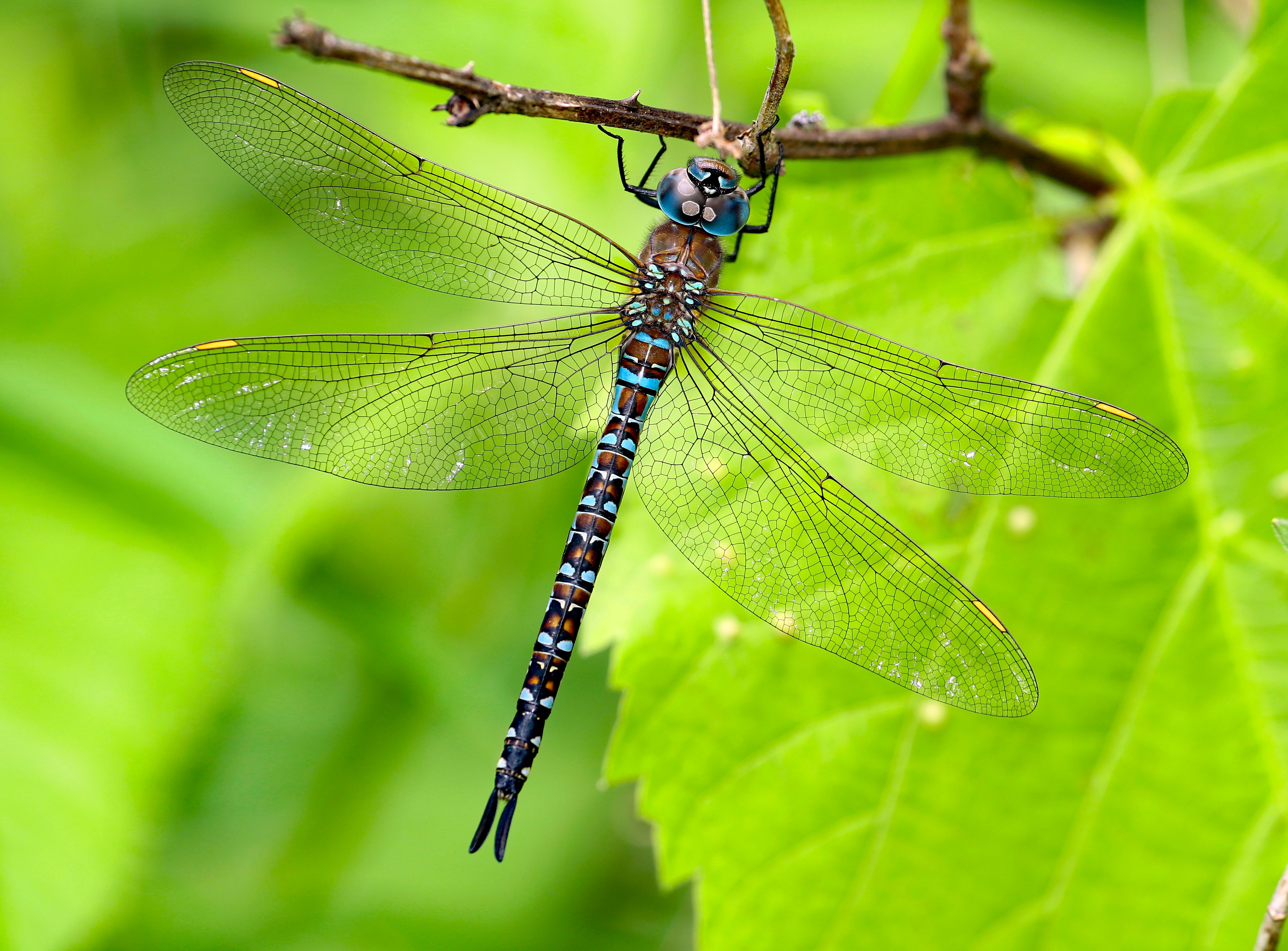
If you scan the aerial highway, the Common Green Darner (Anax junius) is the easiest companion to spot. The word “common” implies something simple, ordinary, or boring. As Kurt Mead – author of Dragonflies of the North Woods – reminds us, the Common Green Darner is anything but!
At three inches long with a five-inch wingspan, they are formidable aerial predators. Males sport a vivid leaf-green thorax and electric-blue abdomen, while females and juveniles carry a quieter purplish-brown hue. A distinct bullseye marking – a dark spot encircled by blue – is stamped between their massive compound eyes. After months as aquatic ambush hunters in northern ponds, the transformed adults take to the air, using incredible maneuverability to hunt flying insects along open waters and ridgelines.
Amazing Research Results
To study how these powerful insects manage long-distance travel, researchers attached micro-transmitters weighing just 300 milligrams – roughly half the weight of a paperclip – to the underside of their thoraxes using eyelash adhesive and superglue. Using handheld antennas and tracking planes, scientists discovered these dragonflies can travel 70 to 90 miles in a single day, riding thermals all the way to the Gulf Coast of Texas, Mexico, and occasionally Central America.
They are not alone. More than a dozen species join this seasonal departure, including meadowhawks, wandering gliders, and black saddlebags. Aren’t those wonderful names for dragonflies?
Shared Corridors and High-Altitude Hunters
Dragonflies often travel alongside Common Nighthawks – extraordinary insectivorous birds bound for South America. Both fuel their journey on the wing, hunting smaller insects mid-flight.
Yet as the afternoon wanes, the hunters become the hunted.
Migrating American Kestrels and Merlins follow these exact ridge lines, snagging green darners right out of the air. Along the way, these dragonflies carry the stored energy of northern waters across thousands of miles, feeding hungry raptors and songbirds sharing the same migratory corridors.
To survive the gauntlet, dragonflies rely on incredible sensory design. Their compound eyes are composed of up to 30,000 individual visual units (known as ommatidia), giving them nearly 360-degree vision to detect approaching raptors.
A Multi-Generational Relay
The most remarkable aspect of dragonfly migration is that no single individual makes the round trip.
Unlike a bird returning to the same nest each spring, this journey is a multi-generational relay. The adults traveling south along Lake Superior today will lay their eggs in southern ponds and complete their life cycle.
Their offspring develop in warm southern waters over the winter, emerge as winged adults in spring, and fly back north to Minnesota’s wetlands to continue the cycle.
When you stand on a ridge and watch a Common Green Darner catch a north wind, you realize how effortlessly the North Shore ties into the rest of the continent – and how vital every small traveler is to the grand whole.
Take a Moment to Look Up
The next time you are outside on a clear, sunny afternoon late in the season, slow down and look up for a few minutes.
You might catch the iridescent glint of a single green darner patrolling high overhead. Or you might catch a major push – thousands of transparent wings catching the afternoon sun as they ride the breeze south.
Once you learn to notice them, a whole new layer of the autumn migration reveals itself directly above you.
Want to learn more? The Minnesota Dragonfly Society offers information and events focused on dragonflies and their migration. Hawk Ridge Bird Observatory also offers live migration counts from Aug. 15 through Nov. 30, both in person and online.
This post was inspired by recent reporting in the Minnesota Star Tribune on dragonfly migration along Minnesota’s North Shore.